

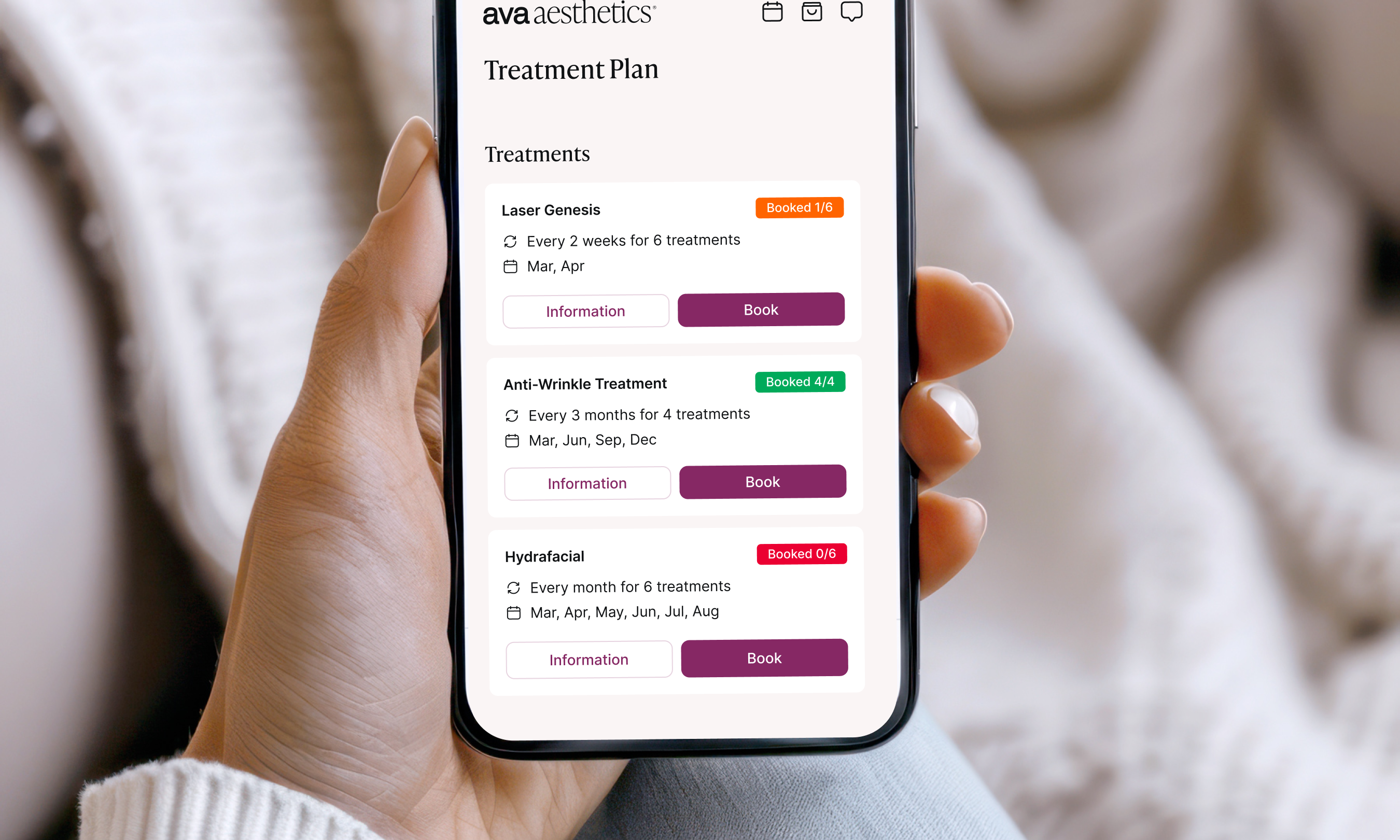
Treatment planning is the divider between a single appointment, and the pathway for a patient who follows a journey with your clinic. For all that, it remains one of the most undervalued parts of clinical practice, too often reduced to a quick suggestion, or a note that never goes anywhere. For years, its value was a matter of conviction - now, there’s evidence.
Research published in the Journal of Cosmetic Dermatology, drawn from almost 15,000 patients across 17 Australian clinics, found that patients given a formal consultation assessment and a structured plan were more than twice as likely to still be in care six months later. Those without a structured plan to follow were the first to drift away, and the more deliberately a plan mapped their care over time, the longer they stayed.
A retained patient brings years of treatments, skincare, and referrals, all from a relationship you only had to earn once. Lose them early and you remain in the cycle - fill the diary, carry out the sessions, worry about how to fill the diary next, paying again to win the patients you already had.
It's exactly what we built DappleOS to prevent: With a plan that keeps working long after the patient leaves the room, seeing them through each step until they're back in the chair.
Grounded in real clinical expertise
The case for structured planning didn't start with a journal - it started on the clinic floor.
Suzie Hoitink, our Co-Founder and Chief Growth Officer, first recognised how treatment planning shapes the quality of clinical care while building and scaling one of Australia's most recognised clinic groups, Clear Complexions.
Having seen first-hand what happens when a plan exists only as a note in a file, she has spent her career developing and refining the standard for treatment planning in clinical care. It now sits at the heart of DappleOS as a growth engine, built on that industry-first expertise to help clinics reach excellence.
"The most valuable patient is not the one who spends the most today. It is the one who remains under your care for years." - Suzie Hoitink
Suzie’s industry-shaping consultation standard is exactly what thid research now bears out. A patient guided by a clear plan keeps coming back year after year; let that plan stall after the consult, and they quietly slip away, taking everything the relationship might have become. The intent was always there. It just had nowhere to go once the consult ended.
It is a conviction Suzie has carried for years. As she puts it, treatment planning turns unpredictable clinics into predictable businesses.
Built into the everyday
In DappleOS, the treatment plan never goes quiet after the consult. It’s a living record of the patient's goals, treatments, and prescriptive skincare that updates in real time and syncs straight to the patient's app.
Because it all connects in one place, nothing slips:
- Care maps across a twelve-month view: Treatments can run as one-off sessions or recurring courses, so a clear rhythm of care takes shape from the very first appointment.
- Plans anchor to what matters: A wedding, a holiday, a personal milestone; intention is far easier to act on when it is tied to a moment the patient genuinely cares about.
- Every item carries a live status: The team can see at a glance what is booked, what is recommended, and where an opportunity is quietly waiting to be picked up.
- Skincare is prescribed in the same flow: Retail sits inside the plan as a natural next step, recommended in the same breath as treatments, which is part of why clinics using structured planning report improvements of up to 30 per cent in skincare revenue.
- The patient sees the plan too: Because it lives in their app between visits, their goals stay front of mind, and rebooking or repurchasing is only a tap away.
Let structure do the heavy lifting
The research also shows why structure works, and each reason points to something a plan should be doing for you:
- It sets clear expectations: When a patient can see the path ahead, what comes first, what follows, and why each step earns its place, they’re more likely to commit to the whole journey, and keep showing up for it.
- It builds in reasons to return: Each scheduled assessment is a genuine reason to reconnect, and the research links those touchpoints directly to patients staying the course.
- It makes care feel personal: A considered plan shows the patient their care has been shaped around them, and that is what turns a one-off visit into a lasting relationship.
Doing all of this by hand, across a full diary and a busy team, is where good intentions fall apart. That’s the gap DappleOS is purpose-designed to close.
Leave nothing to chance
The clinics acting on Treatment Planning now, are the ones the rest will be measured against.
Book a demo and discover how DappleOS turns a thoughtful plan into something your patients can see, your team can act on, and your clinic can grow from.
Reference: Fox A, Guest L, Telfer T. Enhanced patient retention with formal, structured facial assessment and treatment planning: a multi-clinic real-world analysis. J Cosmet Dermatol. 2026; 25:e70728.

