

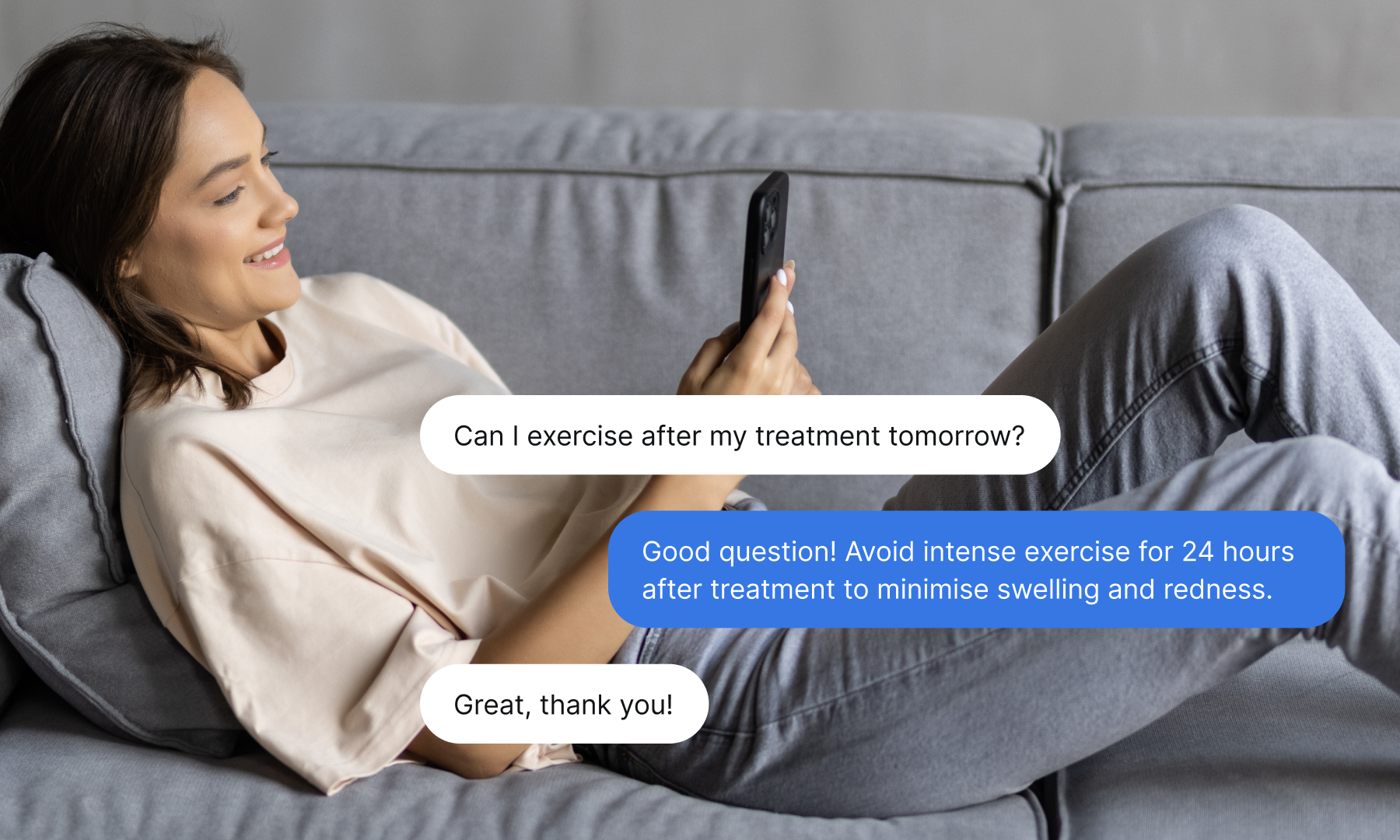
In the flow of a busy clinic, communication often feels like a separate task. It’s something you do after the real work is finished by stepping away from the patient record, crafting an email or picking up a dedicated phone.
But care does not happen in silos, and neither should the conversation. We built direct messaging into DappleOS to remove the friction between seeing a patient’s data and reaching the patient themselves.
Context is the cure for friction
The most powerful thing about messaging from within a patient record is not the speed. It is the context. When you send a message, you are not just sending text; you are continuing a clinical narrative.
- Dual channels: Choose between the patient app or a dedicated two-way SMS number. The patient gets the message where they are most likely to see it, and you get the reply exactly where you need to see it.
- The unified thread: Because every reply automatically attaches to the record, the administrative trail is always clear. The conversation becomes a permanent part of the care history.
A safety net, not a gatekeeper
In a regulated industry, the fear of saying the wrong thing can often lead to saying nothing at all. To solve this, we integrated an AI-powered compliance check.
It is designed to be a quiet partner. As you draft a message, the system reviews it against regulatory guidelines and provides a status. It does not block your workflow or dictate your tone. It simply provides a layer of oversight that helps practitioners communicate with confidence.
Ending the information handover
For the rest of the team, the centralised inbox acts as the clinic’s collective memory.
- No briefings required: If a staff member is away, anyone else can jump into the inbox, see the history and pick up the thread.
- Signal over noise: With the ability to mark conversations as complete and filter by location, the inbox stays focused on what needs attention now, rather than a cluttered history of what happened yesterday.
Closing the distance in telehealth
For telehealth practitioners, the space between appointments can often feel like a gap where patient engagement drops off. Direct messaging fills that gap. It allows for small, high-impact touchpoints like a quick follow-up, clarification or check-in. These are the details that turn a digital interaction into a human relationship.
The result is not just a feature in a software suite. It is a smoother day for the practitioner and a more connected experience for the patient.

